

As the deadline for the mandatory halal law for exports to Indonesia draws nearer, U.S. manufacturers are actively exploring halal certification to come under compliance.
Under Indonesia’s Halal Product Assurance Law, only halal certificates issued by Badan Penyelenggara Jaminan Produk Halal (BPJPH)–recognized foreign halal certification bodies are accepted.
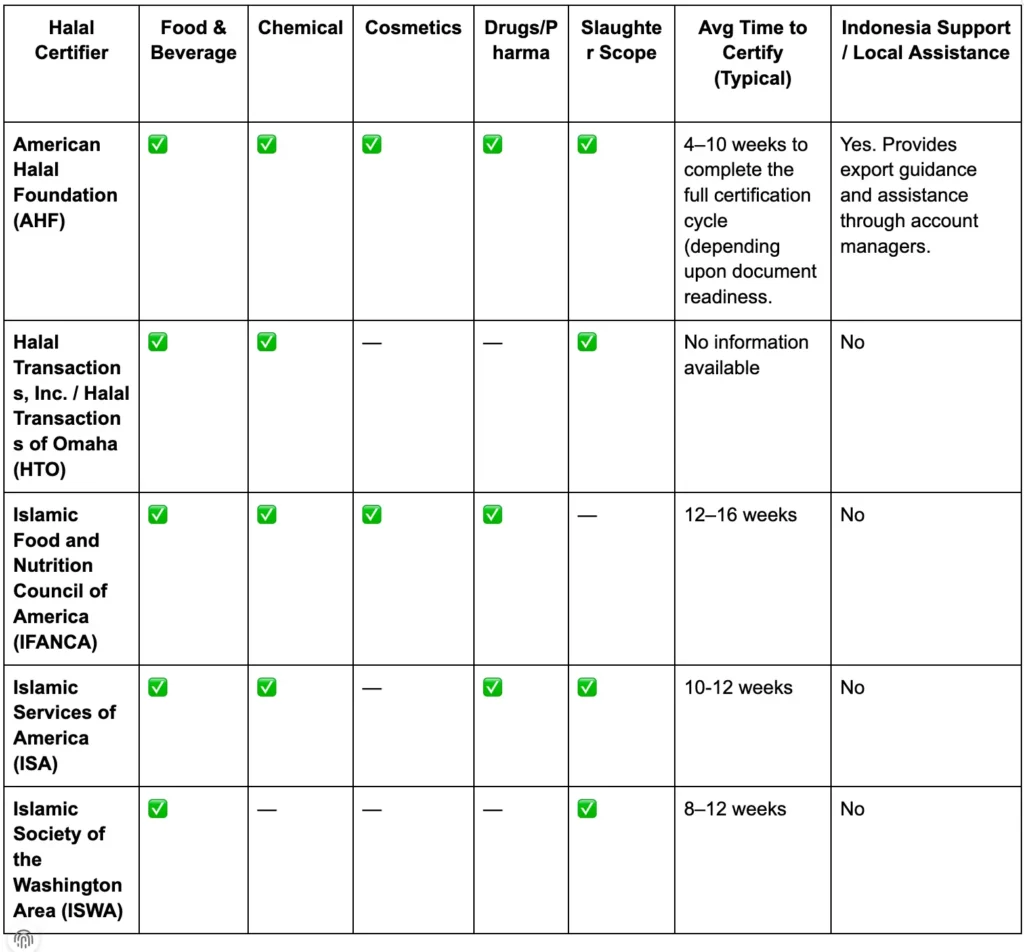
This guide provides a clear, up-to-date list of BPJPH-recognized halal certifiers in the United States, including their approved scopes (food, beverages, chemicals, cosmetics, pharmaceuticals, slaughter, etc.).
BPJPH-Recognized U.S. Halal Certifiers
Get Expert Help
For U.S. manufacturers seeking compliance with Indonesia’s mandatory halal regulations, it is crucial to obtain halal certification only from BPJPH-recognized foreign halal certification bodies (LHLNs) that are approved for the specific scope of your product.
To learn more about Indonesia’s halal regulations and stay up to date with the latest changes, get in touch with a halal certification expert at info@halalfoundation.org.
Frequently Asked Questions (FAQs)
1. What is BPJPH and why does it matter for U.S. exporters?
Badan Penyelenggara Jaminan Produk Halal (BPJPH) is Indonesia’s official halal authority. Indonesia only accepts halal certificates issued by BPJPH-recognized foreign certifiers. If your certificate is not recognized, your product cannot be legally sold in Indonesia.
2. Is halal certification mandatory in Indonesia?
Yes. Under Indonesia’s Halal Product Assurance Law, halal certification is mandatory for food, beverage, cosmetic, pharmaceutical, and consumer products, including imports. Enforcement is being rolled out in phases by product category.
3. Can any U.S. halal certifier issue a certificate for Indonesia?
No. Only BPJPH-recognized U.S. halal certifiers can issue certificates that are eligible for registration in Indonesia. Even then, the certifier must be approved for the specific product scope (e.g., food vs. cosmetics vs. chemicals).
4. What happens after I receive a halal certificate in the U.S.?
The certificate must still be registered with BPJPH via the SIHALAL system. This is typically done by:
- An Indonesian importer
- A local representative
- Or an appointed partner in Indonesia
5. What is the biggest mistake companies make when exporting to Indonesia?
Choosing a halal certifier without checking BPJPH recognition and scope approval. This often results in:
- Rejected registrations
- Re-certification costs
6. What should I verify before choosing a U.S. halal certifier?
Before choosing your halal compliance partner check:
- BPJPH recognition status
- Approved product scope
- Experience with Indonesia exports
- Certification timeline
- Post-certification support for BPJPH registration

Backed by more than 60+ years of combined experience in global halal standards and practices, the Halal Foundation Editorial Team is dedicated to delivering insightful, accurate, and practical content that empowers businesses and consumers to navigate the halal landscape.



 Food
Food Bread & Bakeries
 Beverages
 Coffee
 Confectionery Products
 Dairy & Cheese
 Food Service
 Food Enzymes
 Meat and Poultry
 Natural & Artificial Food Flavors
 Nuts & Dried Fruits