
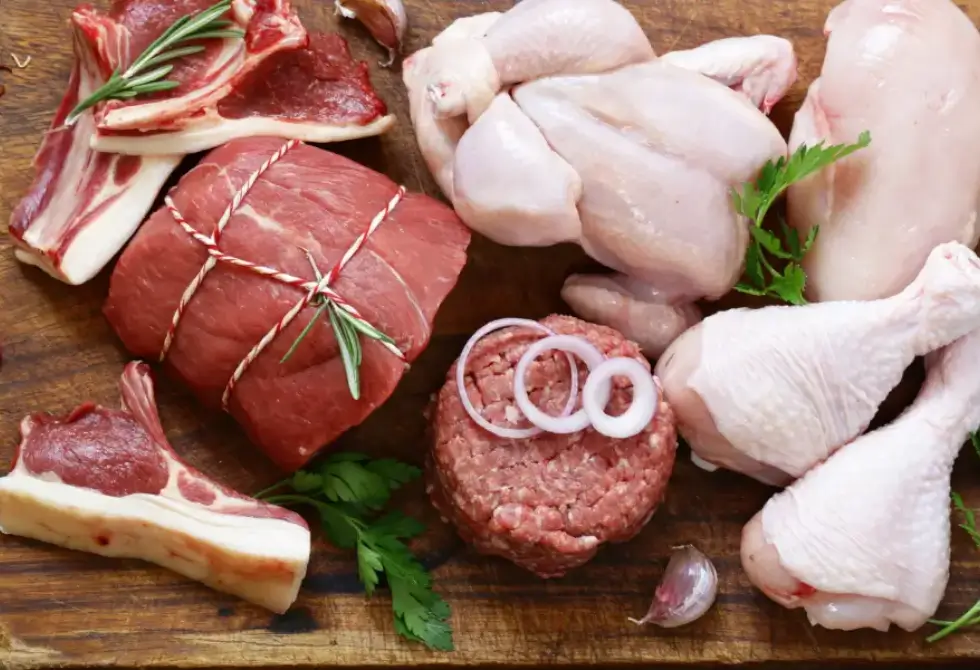
In simple terms, halal meat is meat that comes from animals slaughtered according to Islamic dietary guidelines. Whilst most assume halal meat is only about the method of slaughter, it actually encompasses the entire process from meat handling, processing to storage.
In this guide, we take a deeper dive into what constitutes halal meat, including the principles behind it and the standards that ensure its integrity.
Which Meat Can Be Halal?
a) Permissible (Halal) Animals:
These are animals that can be halal if slaughtered in accordance with the Islamic dietary guidelines:
- Cattle (beef)
- Sheep and lamb
- Goat
- Chicken and other poultry (e.g., turkey, duck)
These animals are naturally considered lawful in Islam, making them eligible for halal consumption.
b) Animals That Are Not Halal (Haram):
Some meats cannot be halal, regardless of how they are processed:
- Pork and all pork-derived products
- Carnivorous animals (e.g., lions, dogs)
- Birds of prey (e.g., eagles, hawks)
These are explicitly prohibited and cannot be made halal under any circumstance.
The Slaughter Process Is Central to Halal Meat
One of the most important parts of halal meat is the slaughter process. In Islamic dietary law, the life of an animal is treated with seriousness, and the act of slaughter is not meant to be careless, hidden, or disconnected from moral responsibility.
In general, halal slaughter requires that the animal is alive at the time of slaughter, that the slaughter is performed by a qualified person, that the name of Allah is invoked, and that the cut is made properly using a sharp instrument. The cut should allow the blood to drain from the animal, since flowing blood is not permissible for consumption.
The use of a sharp knife is important because it helps reduce unnecessary suffering. The animal should not be abused, mishandled, or placed under avoidable stress. Proper animal treatment is not a side issue in halal; it is part of the broader spirit of Islamic guidance on mercy, cleanliness, and responsibility.
What Makes Meat Non-Halal?
Meat may be considered non-halal for several reasons. The most obvious reason is that the animal itself is prohibited, such as pork. Another reason is that the animal was not slaughtered according to Islamic requirements, or that it died before slaughter.
Meat may also lose its halal status if it is contaminated after slaughter. This can happen when halal meat is mixed with non-halal meat, processed on unclean shared equipment, stored together with prohibited items, or handled in a way that does not protect halal integrity.
Processed meat products require special attention because they often include more than just meat. Items such as deli meats, sausages, nuggets, burgers, broths, marinades, seasonings, and ready-to-eat meals may contain additives, flavors, enzymes, casings, emulsifiers, or processing aids. If any of these ingredients come from a non-halal source or are processed in a non-compliant way, the final product may not be halal.
This is one of the main reasons Muslim consumers often look for a recognized halal certification, especially when buying packaged or processed meat products. Certification helps confirm that the product has been reviewed beyond the surface-level claim.
Halal Meat vs Non-Halal Meat
| Aspect | Halal Meat | Non-Halal Meat |
| Animal source | Must come from a halal-permitted species such as cattle, sheep, goats, deer, chicken, turkey, duck, or quail. | May come from a source that does not meet halal species rules, including prohibited categories such as swine. |
| Slaughter method | Must follow halal slaughter requirements, including a proper cut, full drainage of blood, and compliance with dhabiha rules. | Does not have to follow halal slaughter requirements. |
| Handling after slaughter | Must be kept separate from non-halal product lines and protected from cross-contamination during processing, storage, and transport. | Not required to follow halal segregation and contamination-control rules. |
| Verification | Usually supported by halal certification, documentation, and audit controls. | Not verified against halal certification requirements. |
Why is Halal Meat Critical for Muslims?
Halal meat is critical for Muslims because food is not viewed as a purely personal or lifestyle choice in Islam. In Islam, Muslims are commanded to consume what is halal and tayyib. Halal means lawful or permissible, while tayyib refers to clean, pure, and good.
For Muslims, halal meat is first and foremost a matter of obedience to Islamic dietary law. Islam clearly prohibits certain foods, such as pork, flowing blood, carrion, and animals slaughtered in the name of anything other than Allah.
Halal certified meat gives Muslim consumers confidence that these concerns have been addressed. When supported by proper halal controls or certification, it helps consumers trust that the product aligns with their religious requirements.
The Growing Demand for Halal Meat
The demand for halal meat is growing as halal is now becoming a major global food category, driven by population growth, international trade, and stronger halal regulations.
This growth sits within the wider halal food economy. Muslim consumers spent about USD 1.43 trillion on food and beverages in 2023, and that figure is projected to reach USD 1.94 trillion by 2028. Since meat is one of the most sensitive and important halal categories, much of this growth directly affects demand for halal-certified beef, poultry, lamb, goat, processed meats, and ready-to-eat meals.
Summary
Halal meat is critical for Muslims because it is directly connected to Islamic dietary law, spiritual discipline, and trust in what a person consumes. For Muslims, eating halal is not simply a food preference; it is part of obeying critical religious guidelines and avoiding what is prohibited.
At the American Halal Foundation (AHF), we help consumers and businesses better understand what halal truly means and how halal integrity is maintained from source to final product. Explore more helpful halal consumer guides on the halal consumer blog to make informed choices.
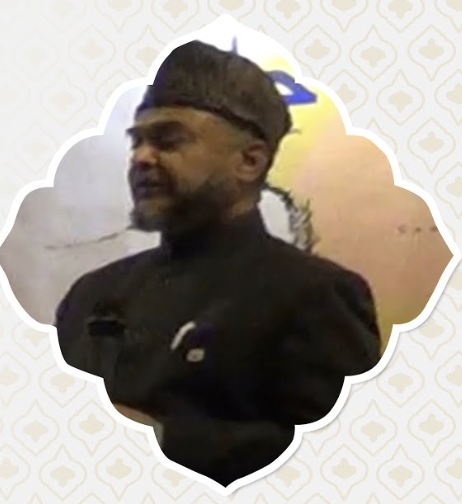
In 1983, Mazhar Hussaini conducted one of the first formal halal audits in the United States, laying the groundwork for structured halal certification processes. Since then, Dr. Mohammad Mazhar Hussaini is a pioneering figure in the global halal movement and the President of the American Halal Foundation (AHF). With a career spanning over four decades, Dr. Hussaini has been instrumental in shaping halal certification standards and practices worldwide.
As an author, Mazhar Hussaini has contributed extensively to Islamic literature, focusing on dietary laws and ethical practices. His notable works include “Islamic Dietary Concepts & Practices“, “The Institution of Fasting”, and “My Little Book of Halal and Haram”, among others. These publications serve as essential resources for understanding halal principles and their application in daily life.
Under his leadership, the American Halal Foundation continues to uphold rigorous halal standards, providing certification services that are recognized globally. Dr. Hussaini’s unwavering commitment to halal integrity has significantly influenced the industry’s growth and consumer trust in halal-certified products. His efforts have been pivotal in ensuring that halal standards are maintained across various industries, including food production and pharmaceuticals.



 Food
Food Bread & Bakeries
 Beverages
 Coffee
 Confectionery Products
 Dairy & Cheese
 Food Service
 Food Enzymes
 Meat and Poultry
 Natural & Artificial Food Flavors
 Nuts & Dried Fruits