
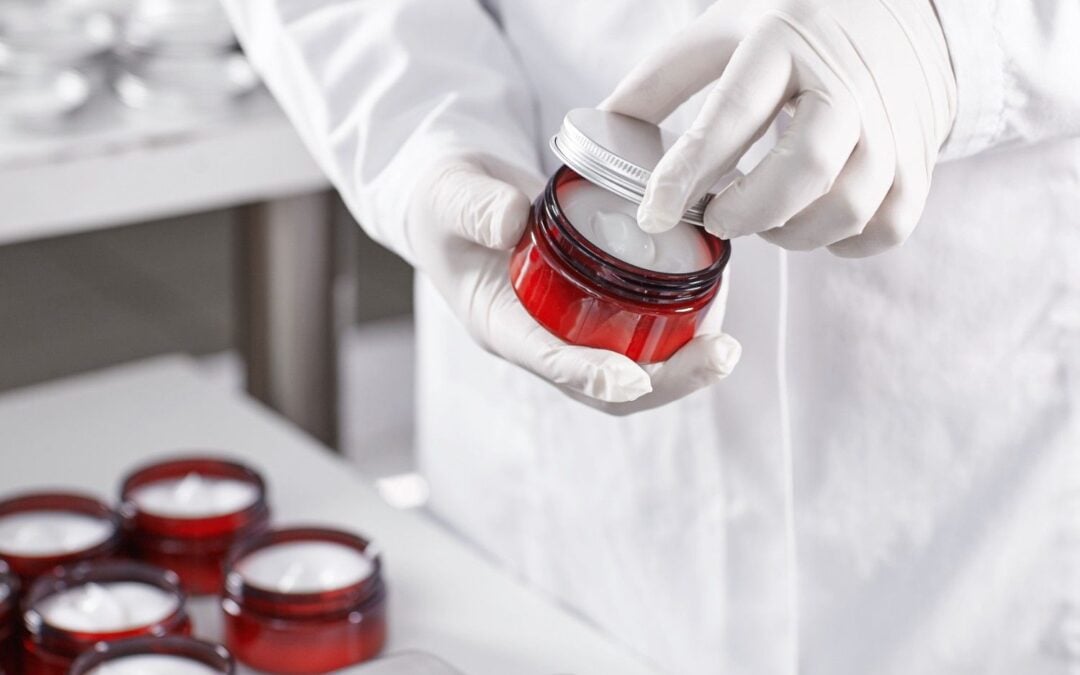
Choosing the right contract manufacturer for a cosmetics brand is a critical decision that directly impacts the success of future product launches and long-term brand growth. In the United States, the best partners are those that combine robust quality systems, strong regulatory compliance, and the capacity to scale as your business grows.
Below is the proven framework our experts recommend for U.S based cosmetics brands when selecting a contract manufacturing partner.
The Difference Between Private Label and Contract Manufacturing
Some brands don’t realize the major difference between private label and contract manufacturing. Here’s a quick demarcation of the two:
- Private labels use pre-made formulas that multiple brands can sell under different labels. It’s faster and cheaper, but offers little differentiation and no formula ownership.
- Contract manufacturing creates a custom formula for your brand, giving you more control, stronger compliance oversight, and better long-term scalability.
5-Step to Choose the Right Contract Manufacturer
Here is a simple five step guide to choosing the right contract manufacturer for your brand:
Step 1: Identify Product Category
In the United States, a product’s intended use, defined by your claims and how consumers use it; determines whether it is regulated as a cosmetic, a drug, or both. If your marketing drifts into drug claims (such as acne treatment, anti-dandruff, SPF, or “heals eczema”), you enter a much stricter compliance environment.
Before engaging with any manufacturer, prepare a one-page product specification sheet that includes:
- Product type (serum, body butter, shampoo, pressed powder, etc.)
- Texture and sensory targets
- Shade range (for color cosmetics)
- Fragrance preferences and allergen restrictions
- “Free-from” requirements (silicones, parabens, talc, phenoxyethanol, etc.)
- Target cost per unit (COGS) and intended MSRP
- Packaging concept (airless pump, glass dropper, jar, tube, etc.)
- Sales channels (Amazon, DTC, or retail—each has different manufacturing and compliance expectations)
Step 2: Review Regulatory Aspect
Even if a contract manufacturer makes the product, your brand typically owns key legal responsibilities depending on how you set things up. Under the FDA’s MoCRA framework, a Responsible Person (often the company name on the label) must list marketed cosmetic products with the FDA, including ingredient information, and provide updates annually.
What this means when picking a manufacturer:
- You want a partner who can support documentation, traceability, and rapid data pulls.
- If they’re sloppy with records, you will feel the pain when deadlines, audits, complaints, or retailer compliance checks happen.
In addition, choose a contract manufacturer that holds relevant third-party certifications aligned with your product category. These certifications not only demonstrate strong quality and compliance systems, but also unlock broader market opportunities for export and specialty markets.
Depending on your product and target audience, look for manufacturers with certifications such as:
- ISO 22716 (Cosmetics cGMP)
- Halal certification
- Gluten-Free certification
- Plant-Based or Vegan certification
Working with a manufacturer that already maintains these certifications can significantly reduce your regulatory burden, accelerate market entry, and expand your brand’s global reach.
Step 3: Perform a Controlled Pilot
It is best to perform a controlled pilot before committing to a contract manufacturer. A sensible rollout looks like:
- Lab samples (multiple iterations)
- Pilot batch (small run)
- Stability + micro confirmation aligned with your risk level
- Packaging compatibility check
- First production run with tightened inspection
- Post-launch review after 60–90 days of sales + feedback
Step 4: Audit Their Capabilities
The next step is to evaluate the manufacturer’s capabilities. A qualified contract manufacturer should be able to demonstrate competence in two key areas:
A. Quality system
You want to see evidence of:
- Batch records that are complete and reviewable
- Lot traceability (raw materials → finished goods)
- Controlled procedures (SOPs) and training records
- Deviations, CAPA (corrective actions), and change control
B. Scale and consistency
The other key aspect to discuss is:
- Current capacity and peak seasons
- Lead times today (raw materials + filling + secondary packaging)
- How do they handle reorders (do they lock the formula? do they re-source “equivalent” ingredients?)
Step 5: Review Formula Control and Manufacturing Realities
At this stage, clarify who owns the formula, whether it belongs to your brand, the manufacturer, or is shared. Also confirm whether you can take the formula to another facility if the partnership ends. You should also understand how ingredient substitutions are handled and whether you retain approval rights over any changes.
Equally important are the practical manufacturing details. Ask about minimum order quantities per SKU and per shade (for color cosmetics), line setup fees and what they include, typical scrap or loss rates during first production runs, and realistic lead times for both initial production and reorders.
Where to Find Qualified Cosmetic Contract Manufacturers in the U.S
You can identify reliable cosmetic contract manufacturers in the United States through several trusted industry channels:
- Industry directories and trade shows such as Cosmoprof North America and NYSCC Suppliers’ Day, where vetted manufacturers showcase their capabilities and compliance standards.
- Referrals from packaging suppliers and raw material distributors, who often work closely with manufacturers and can recommend partners with proven performance and quality systems.
- For manufacturers seeking qualified export partners for specific international markets, contact American Halal Foundation to get access to its database of approved contract manufacturers.
- Retailer and vendor compliance networks, since many established manufacturers already meet major retailer documentation and quality requirements.
Using these sources helps you build a shortlist of manufacturers that are already aligned with U.S. regulatory expectations and industry best practices.
Also Read: List of Top Cosmetic Brands and Manufacturing Companies in the USA
Frequently Asked Questions (FAQs)
Q1: Who is legally responsible for cosmetic compliance in the United States—the brand or the manufacturer?
In most cases, the brand listed on the product label is the “Responsible Person” under FDA regulations. This means the brand is accountable for product safety, ingredient accuracy, and FDA product listing, even if a contract manufacturer produces the product.
Q2. What certifications should a U.S. cosmetic contract manufacturer have?
A qualified manufacturer should follow recognized standards such as ISO 22716 (Cosmetics GMP). Depending on your target market, additional certifications like Halal, Gluten-Free, Vegan, or Plant-Based can support export readiness and specialty retail requirements.
Q3: How can I verify a manufacturer’s quality system before signing a contract?
You should request evidence of batch records, traceability systems, SOPs, deviation and corrective action processes (CAPA), and documentation practices. A site visit or virtual audit is strongly recommended before final approval.
Q4: What is the difference between private label and contract manufacturing for compliance?
With a private label, you rely heavily on the manufacturer’s existing formulas and systems, with limited control over changes. Contract manufacturing allows you to define specifications, testing requirements, and change control, giving stronger regulatory oversight and long-term brand protection.
Q5. Why is formula ownership important when choosing a contract manufacturer?
Formula ownership determines whether you can move production to another facility if the partnership ends. Clear ownership and change control rights protect your intellectual property and prevent disruptions to your supply chain.

Azmi Anees is a certification and compliance specialist working with the American Halal Foundation, where he focuses on global halal certification programs, integrated audits, and market-access strategy for food, cosmetic, nutraceutical, and ingredient manufacturers. He has worked closely with multinational brands and SMEs across North America, the Middle East, and Southeast Asia. His insights emphasize on practical guidance for manufacturers looking to achieve halal compliance while improving operational efficiency and global market reach.



 Food
Food Bread & Bakeries
 Beverages
 Coffee
 Confectionery Products
 Dairy & Cheese
 Food Service
 Food Enzymes
 Meat and Poultry
 Natural & Artificial Food Flavors
 Nuts & Dried Fruits