
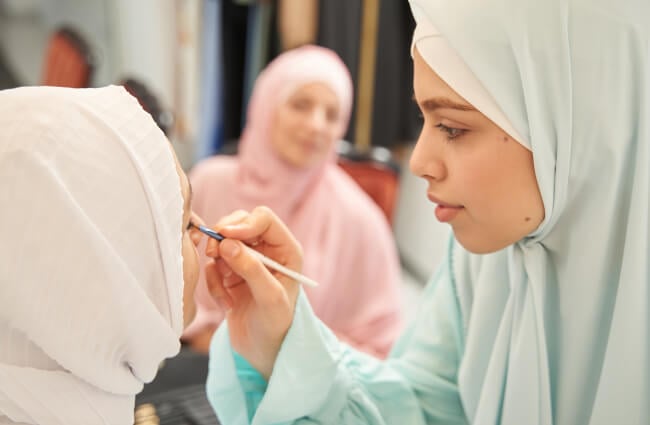
The demand for halal cosmetics has already surpassed $50 billion and continues to grow rapidly, driven by increasing demand for premium, halal-certified products.
With rising consumer awareness and stricter regulatory requirements in halal-majority markets, halal certification for cosmetics has become one of the fastest-growing compliance priorities for both brands and contract manufacturers.
In this guide, we explore what truly makes a cosmetic product halal and highlight some major brands that have already achieved halal certification.
What Makes a Cosmetic Product Halal?
A product is halal only if:
- No haram ingredients (e.g., pork derivatives, non-halal animal fats, beverage grade alcohols)
- No cross-contamination in manufacturing
- Entire supply chain is controlled
- Certified by a recognized halal certification body
Therefore, not all vegan, or organic brands are halal.To halal certify a specific brand, certification bodies like the American Halal Foundation verify both ingredients AND production systems.
Halal Friendly/Suitable vs Halal Certified
Many cosmetic brands may not visibly contain any haram (prohibited) ingredients and can be considered halal-friendly or suitable. However, they cannot be labeled as fully halal unless they are certified by a reputable halal certification body.
This distinction is critical. Even if all ingredients are halal or even individually halal-certified, the final product can still become non-compliant during processing. For example, if the product is manufactured in a facility that also handles haram materials, there is a risk of cross-contamination, which compromises its halal status.
In short, halal-friendly refers to ingredient-level suitability, while halal-certified ensures full compliance across ingredients, processing, handling, and the entire supply chain.
Which Cosmetic & Personal Care Brands are Halal?
Here are some cosmetic and personal care brands that are halal-certified:
| Brand Name | Country / Origin |
| Sunday Riley | USA |
| Timeless Skincare | USA |
| Revlon | USA |
| Sol De Janeiro | USA / Brazil |
| Nu Skin | USA |
| Wardah Cosmetics | Indonesia |
| Seenaya | USA |
| INIKA Organic | Australia |
| Iba Cosmetics | India / USA |
| PHB Ethical Beauty | UK |
| Flora & Noor | USA |
*This list is accurate as of the date of publication. The American Halal Foundation (AHF) is actively working with several major global brands to support their halal certification efforts, and this list will continue to evolve as more brands achieve certification. Additionally, not all products under these brands are halal-certified, hence consumers are recommended to request product level certification information directly from the brands.
How to Verify If a Cosmetic Brand Is Halal
The most reliable way to verify a cosmetic product is halal is through certification by a recognized halal authority.
Look for logos or documentation from:
- BPJPH or its recognized certification bodies (Indonesia)
- American Halal Foundation (AHF) in the U.S
- JAKIM (Malaysia)
Frequently Asked Questions (FAQs)
Q1: Is CeraVe halal?
CeraVe is not halal-certified. While some ingredients may be permissible, the brand does not provide halal certification or full supply chain verification.
Q2. Is The Ordinary halal?
The Ordinary is not halal-certified. It is known for simple formulations, but halal compliance depends on ingredient sourcing and manufacturing, which are not certified.
Q3: Is Neutrogena halal?
Neutrogena is not halal-certified. As a mainstream brand, it does not guarantee halal-compliant ingredients or production processes.
Q4: Is Cetaphil halal?
Cetaphil is not halal-certified. Some products may appear suitable, but there is no formal halal certification to verify compliance.
Q5. Is La Roche-Posay halal?
La Roche-Posay is not halal-certified. The brand does not claim or verify halal compliance across its products.
Q6. Is Dove halal?
Dove is not halal-certified. It is widely used globally, but does not follow a halal-certified production or ingredient verification system.
Q7. Is L’Oréal halal?
L’Oréal is not fully halal-certified. Some products in certain regions may be halal-certified, but this does not apply to the entire brand globally.
Q8. Is Maybelline halal?
Maybelline is not halal-certified. As part of L’Oréal, it does not maintain full halal compliance across its product lines.
Q9. Is MAC Cosmetics halal?
MAC is not halal-certified. There is no official halal certification for its products or manufacturing processes.
Q10. Is Fenty Beauty halal?
Fenty Beauty is not halal-certified. While some products are vegan or cruelty-free, halal certification is not provided.
Q11. Is Huda Beauty halal?
Huda Beauty is not fully halal-certified. Some products may be suitable, but the brand does not maintain full halal certification across all lines.
Q12. Is NARS halal?
NARS is not halal-certified. It does not claim halal compliance or certification.
Q13. Is Clinique halal?
Clinique is not halal-certified. Although known for dermatological products, halal compliance is not verified.
Q14. Is Estée Lauder halal?
Estée Lauder currently does not hold a company wide halal certification. While there are some products that may have the approval, the brand does not provide halal certification information for its products.
Q15. Is Olay halal?
Olay is not halal-certified. It does not follow a verified halal certification process.
Q16. Is Paula’s Choice halal?
Paula’s Choice is not halal-certified. While the brand focuses on ingredient transparency and science-backed formulations, it does not provide halal certification or verify full supply chain compliance.
Q17. Is Kylie Cosmetics halal?
Kylie Cosmetics is not halal-certified. Although some products may be vegan or cruelty-free, the brand does not maintain halal certification or verified halal manufacturing processes.
*The following information is derived from publicly available sources and is believed to be accurate at the time of publication. AHF’s editorial team does not guarantee its completeness or ongoing accuracy.

Azmi Anees is a certification and compliance specialist working with the American Halal Foundation, where he focuses on global halal certification programs, integrated audits, and market-access strategy for food, cosmetic, nutraceutical, and ingredient manufacturers. He has worked closely with multinational brands and SMEs across North America, the Middle East, and Southeast Asia. His insights emphasize on practical guidance for manufacturers looking to achieve halal compliance while improving operational efficiency and global market reach.



 Food
Food Bread & Bakeries
 Beverages
 Coffee
 Confectionery Products
 Dairy & Cheese
 Food Service
 Food Enzymes
 Meat and Poultry
 Natural & Artificial Food Flavors
 Nuts & Dried Fruits